If you’ve been searching for “how to start a liquidation business” or asking yourself “are liquidation pallets worth it?”, you’re in the right place.
Liquidation pallets can help you start a profitable reselling business with relatively low capital. But like any business model, success depends on understanding the system, managing risk, and making smart buying decisions.
This step-by-step guide explains everything in simple, practical language. By the end, you’ll understand how liquidation pallets work, where to buy them, how much money you need, and what kind of profits you can realistically expect.
What Are Liquidation Pallets?
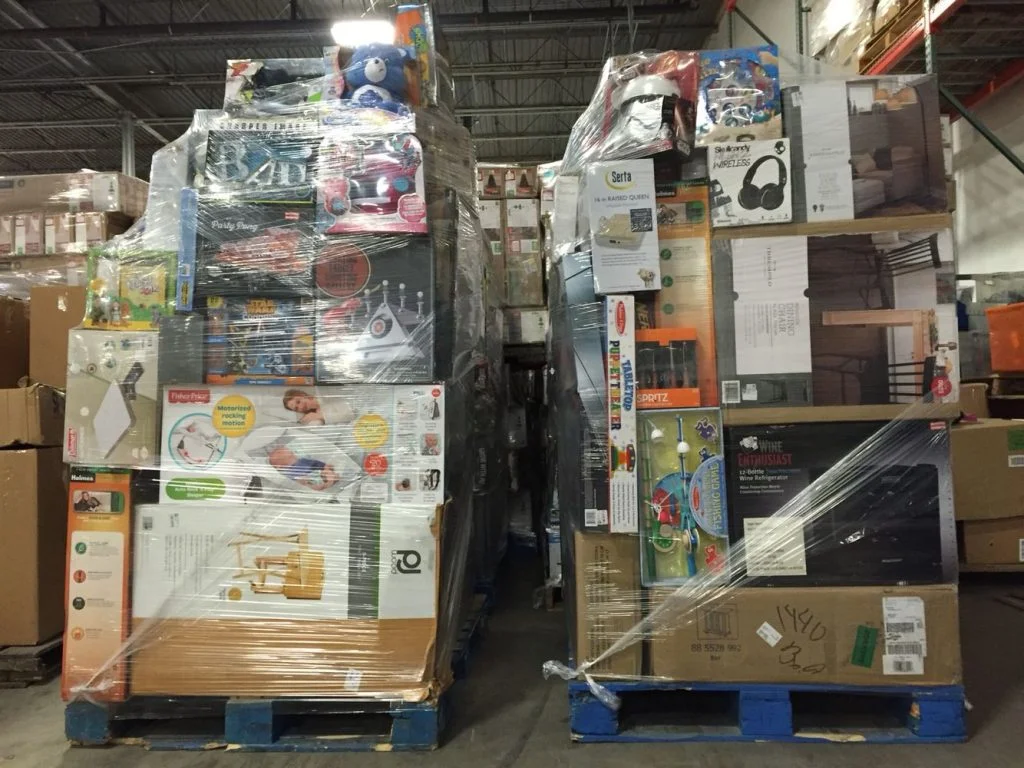
Liquidation pallets are bulk lots of products sold at discounted prices by major retailers. These items usually come from customer returns, overstock inventory, shelf pulls, or seasonal clearance.
Instead of reselling each item individually, large retailers bundle products onto pallets and sell them to third-party buyers. Many of these pallets originate from companies such as Amazon, Walmart, Target, Home Depot, and Costco.
The goal for the retailer is simple: recover some value quickly instead of spending time and labor restocking and inspecting individual returns. The opportunity for you, as a reseller, is buying inventory far below retail price and reselling it individually for profit.
Why Liquidation Pallets Can Be Profitable
Retailers often sell liquidation inventory at 30% to 80% below retail value. That difference creates your margin.
For example, imagine a pallet with a total retail value of $5,000. You might purchase it for $1,800 to $2,200. After sorting, testing, cleaning, and listing the items individually, your resale revenue could reach $3,500 to $4,500 depending on condition and demand.
The key is not the retail value printed on the manifest. The real key is understanding actual resale value in the secondary market.
Step 1: Choose a Clear Niche
One of the biggest beginner mistakes is buying random mixed pallets. At first glance, they seem exciting because of variety. In reality, they are harder to price, harder to store, and harder to sell.
Instead, focus on one product category. Electronics, tools, home goods, clothing, and small appliances are common starting points.
For example, tool pallets sourced from retailers like Home Depot often sell well locally because contractors and homeowners are always looking for deals. Electronics pallets from Amazon can move quickly on resale platforms if items are tested and working.
When you specialize in one category, you learn pricing faster, recognize good deals more easily, and reduce costly mistakes.
Step 2: Where to Buy Liquidation Pallets
Choosing the right supplier is critical. Many beginners lose money because they buy from unreliable sources.
Several established marketplaces connect buyers with liquidation inventory. Platforms such as B-Stock, Direct Liquidation, Liquidation.com, and Via Trading work directly with major retailers.
These platforms often provide a manifest, which is a list of items included in the pallet. While not always perfectly accurate, it gives you an estimate of retail value and product types.
Another option is buying from local liquidation warehouses. Searching for “liquidation pallets near me” can help you find local sellers. Buying locally reduces shipping costs and allows you to inspect inventory in person.
Shipping is one of the most underestimated expenses in this business. Always factor it into your total investment before bidding or purchasing.
Step 3: How Much Money Do You Need to Start?
You do not need tens of thousands of dollars to begin. Many beginners start with $1,500 to $3,000.
A typical first pallet might cost between $800 and $2,500. Shipping can add another $200 to $600 depending on distance and freight size. You will also need basic supplies such as boxes, tape, labels, and possibly shelving for storage.
If you are just starting, avoid borrowing money. Treat your first pallet as a learning experience. Start small, understand the process, then scale gradually.
Step 4: Understanding Realistic Profit Margins
Liquidation is not a guaranteed 100% profit business. Margins vary by category and condition.
Electronics often produce net profits between 20% and 40%. Tools can generate 30% to 50%. Furniture and home goods sometimes reach even higher margins but require more storage space and local selling strategies.
Profit depends on several factors: the accuracy of the manifest, the condition of items, the selling platform you choose, and your ability to price competitively.
Remember that retail value is not resale value. Most liquidation inventory resells at 50% to 70% of original retail price, sometimes less for used or open-box items.
Step 5: Where to Resell Your Inventory
Your selling channel determines both speed and profitability.
Online marketplaces such as eBay allow you to reach a national audience. Facebook Marketplace works well for local sales, especially for heavy items like furniture or tool kits. Amazon can be profitable for experienced sellers familiar with fees and compliance rules. OfferUp is another option for local buyers.
Heavy or bulky products are usually easier to sell locally to avoid shipping costs. Small electronics and branded items tend to perform better online.
Choosing the right platform increases your turnover rate and protects your margins.
Step 6: A Real ROI Example
Let’s look at a realistic beginner scenario.
You purchase a pallet for $1,800. Shipping costs $400. Your total investment is $2,200.
The pallet’s estimated retail value is $6,000. After sorting and testing, you discover that 70% of items are fully functional, 20% have minor issues but can still be sold at a discount, and 10% are unsellable.
After listing and selling the usable products, your total revenue reaches $4,200.
Your net profit is $2,000.
That represents a return on investment (ROI) of around 90%. While not every pallet performs this well, even a 30% to 40% ROI can be sustainable if repeated consistently.
Common Beginner Mistakes to Avoid
Many new resellers treat liquidation pallets like a gamble. That approach leads to losses.
One major mistake is buying mystery pallets without manifests. These are extremely risky. Another common mistake is ignoring shipping costs, which can completely erase profit margins.
Overestimating resale value is also dangerous. Just because an item originally retailed for $200 does not mean you can sell it for $200. Research completed sales on your chosen platform before calculating expected revenue.
Finally, poor storage planning slows down sales. Disorganized inventory leads to delays, lost items, and frustrated customers.
How to Scale a Liquidation Business
Once you understand your numbers and have consistent profits, scaling becomes easier.
Reinvest profits into larger or more consistent pallets. Build relationships with reliable suppliers. Track your ROI carefully. Over time, you can transition from random buying to strategic sourcing in one strong niche.
Some resellers eventually move into warehouse space and full-time operations. Others keep it as a profitable side business. Both models work if managed properly.
Are Liquidation Pallets Worth It?
Yes, liquidation pallets can be worth it. But only when approached as a business, not a shortcut to easy money.
They offer low startup costs compared to launching a private label brand. They provide flexibility. And they allow you to start generating cash flow quickly.
However, risk management, careful calculations, and disciplined purchasing are essential.
If you enjoy flipping products, handling inventory, and spotting deals, liquidation can become a scalable and sustainable income stream.
Frequently Asked Questions
Are liquidation pallets legit?
Yes. Major retailers regularly liquidate returned and excess inventory. The legitimacy risk comes from unverified suppliers, not the business model itself.
How much can you make per pallet?
Beginners often earn between $500 and $2,000 per pallet, depending on category and size. Experienced resellers can generate several thousand dollars per month.
How long does it take to sell a pallet?
It depends on the niche and pricing strategy. Electronics may sell within a few weeks. Clothing and mixed goods may take longer.
Is liquidation better than wholesale?
Liquidation typically offers higher margins but higher risk. Wholesale offers more consistency but lower margins. Your choice depends on your risk tolerance and experience.
Final Thoughts
Starting a liquidation pallet business does not require a massive budget or advanced business experience. It requires research, discipline, and patience.
If you calculate carefully, choose a clear niche, control shipping costs, and price realistically, liquidation pallets can become a profitable reselling business.
Approach it step by step. Start small. Learn from your first pallet. Improve your buying strategy.
That is how beginners turn liquidation into a real income stream.

