
If you’re researching “liquidation vs wholesale” or asking “is liquidation better than wholesale?”, you’re likely serious about starting or scaling a reselling business.
Both models allow you to buy inventory in bulk and resell for profit. But they operate very differently. One offers higher margins with more risk. The other offers consistency with lower margins.
In this guide, we compare liquidation pallets and wholesale across cost, risk, inventory consistency, capital requirements, and profit margins so you can decide which model makes more money for your situation.
What Are Liquidation Pallets?
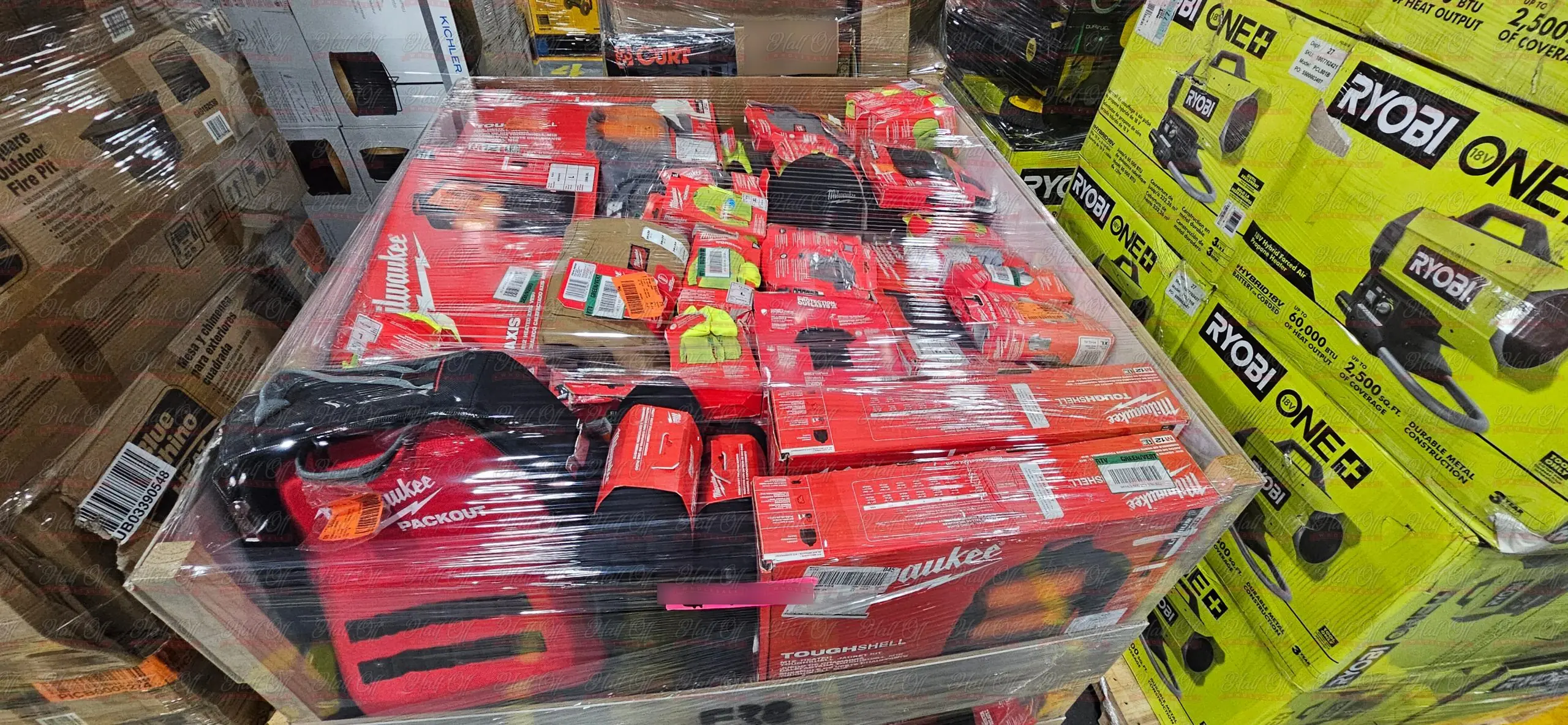
Liquidation pallets are bulk lots of returned, overstock, or excess inventory sold by major retailers at discounted prices.
Retailers like Amazon, Walmart, Target, and Home Depot sell unwanted inventory through liquidation marketplaces such as B-Stock and Direct Liquidation.
Products may include electronics, tools, clothing, home goods, and mixed items. Condition varies from new overstock to customer returns.
The main attraction is price. Liquidation inventory is often sold at 30% to 80% below retail value.
What Is Wholesale?
Wholesale is a more traditional supply model. You purchase new products directly from manufacturers or authorized distributors at bulk pricing, then resell them individually.
Unlike liquidation, wholesale inventory is:
- Brand new
- Consistent
- Reorderable
- Predictable
You typically work with established distributors or brands and can restock the same product repeatedly.
Wholesale is less chaotic than liquidation but also less dramatic in profit margins.
Cost Difference: Liquidation vs Wholesale
Cost structure is one of the biggest differences between the two models.
With liquidation pallets, you usually pay a lump sum for a mixed lot. Prices often range from $800 to $3,000 per pallet depending on category and size. Shipping costs can be significant, especially for freight pallets.
With wholesale, you often have minimum order quantities (MOQs). Instead of buying random mixed products, you purchase specific SKUs in bulk. Initial orders can range from $1,000 to $5,000 or more depending on the supplier.
Liquidation generally offers lower entry points per deal, but wholesale may require more capital upfront for brand approval and consistent inventory orders.
Risk Level Comparison
Risk is where the two models differ most.
Liquidation pallets carry higher uncertainty. You may receive damaged items, incomplete products, or slow-moving inventory. Even with a manifest, actual resale value can vary.
Wholesale inventory is much more predictable. Products are new and consistent. If demand exists, your main risk is competition and price compression.
In simple terms:
Liquidation = Higher risk, higher reward.
Wholesale = Lower risk, lower volatility.
Your personality and tolerance for uncertainty matter here.
Inventory Consistency
If you want repeatable systems and stable listings, wholesale wins.
With wholesale, you can reorder the same product repeatedly. This allows you to optimize listings, run ads, and build long-term revenue streams.
Liquidation inventory is rarely consistent. Once a pallet sells out, that exact mix of items is gone. You constantly need to source new pallets.
For long-term brand building and automation, wholesale is generally more stable.
For flipping and short-term cash flow, liquidation often moves faster.
Capital Required
For beginners, capital availability is a major decision factor.
Liquidation can be started with $1,500 to $3,000 if you begin with smaller pallets and local resale platforms.
Wholesale often requires more structured capital. Suppliers may require business registration, resale certificates, and higher initial order commitments.
However, wholesale can scale more smoothly once systems are in place.
If you have limited startup funds, liquidation may feel more accessible.
Profit Margin Comparison
Now let’s answer the core question: which makes more money?
Liquidation pallets can generate net profit margins between 25% and 50%, sometimes higher if you source well and sell efficiently.
Wholesale margins are typically tighter, often between 10% and 30% depending on the product and competition.
However, wholesale profits are more consistent month to month. Liquidation profits can fluctuate based on pallet quality.
Here’s a simplified comparison:
| Factor | Liquidation Pallets | Wholesale |
|---|---|---|
| Average Net Margin | 25–50% | 10–30% |
| Risk Level | Medium–High | Low–Medium |
| Inventory Consistency | Low | High |
| Capital Flexibility | Moderate | Moderate–High |
| Scalability | Variable | Structured |
Liquidation can produce higher margins per deal. Wholesale often produces more predictable long-term income.
Which Is Better for Beginners?
It depends on your personality and goals.
If you enjoy deal hunting, testing products, flipping locally, and handling mixed inventory, liquidation may be a better starting point. It allows faster learning and quicker cash cycles.
If you prefer structure, repeatable systems, and stable supplier relationships, wholesale might suit you better.
Many experienced resellers actually combine both models. They use liquidation for higher-margin flips and wholesale for stable monthly revenue.
Real-World Example
Imagine two resellers with $3,000.
The liquidation reseller buys one electronics pallet and one tool pallet. After testing and selling, they generate $4,800 in revenue. Their net profit is around $1,500. However, the next pallet may not perform as well.
The wholesale reseller invests $3,000 into 200 units of a branded kitchen product at $15 per unit and sells them at $25. After fees and expenses, they earn $1,200 profit. The margin is smaller, but they can reorder consistently.
Over time, wholesale builds predictable monthly income. Liquidation offers higher spikes of profit but more variability.
Is Liquidation Better Than Wholesale?
Liquidation is better if your priority is higher margins and faster flipping.
Wholesale is better if your priority is stability, long-term scaling, and consistent supply.
Neither model is universally superior. The better choice depends on:
- Your capital
- Your risk tolerance
- Your storage space
- Your long-term goals
Final Verdict: Which Makes More Money?
In raw percentage terms, liquidation pallets usually offer higher profit margins.
In long-term stability and scalability, wholesale often wins.
If you are just starting and want hands-on experience with limited capital, liquidation may help you build cash flow quickly.
If you are building a structured ecommerce business with repeat inventory and systems, wholesale may be the smarter long-term strategy.
The most profitable entrepreneurs often learn both and use each model strategically.

